Beginner
Mistakes Resulting in a Heavy Backpack
Common beginner mistakes that lead to a heavy pack, and how to fix them.
Beginner Mistakes Resulting in a Heavy Backpack
After hundreds of miles and many trips over the last five years, I've noticed the same
handful of mistakes show up again and again with beginner backpackers - mistakes that
snowball into a pack so heavy people end up frustrated enough to quit their trip early.
I put together a video breaking down exactly where that extra weight comes from and how
to avoid it. Watch here!
The Big Three
Your tent, sleeping bag, and backpack are the biggest single opportunities to cut weight, so it's worth starting there. For a tent, I started with an REI Quarter Dome 2 at 3 lb 5 oz, which is a solid middle ground - not too expensive, not too heavy. Later I splurged on a Zpacks Duplex made of Dyneema that uses my trekking poles as poles, and it comes in at just one pound while packing down much smaller, which frees up room for things like extra food on a longer carry. I also keep a heavier 4 lb two-person tent around for when I'm lending out gear or hiking with a group. My rule of thumb: once a tent creeps past about 4 pounds, you're in territory where your pack is going to feel it.
Sleeping bags tell a similar story. My REI Ambient 36 is a synthetic bag around 2 pounds,
and on colder nights in the 30s or low 40s I just add a sleeping bag liner to boost the
temperature rating rather than carrying a heavier bag. Compare that to a cheap 40-degree
bag I have, which is bulkier, only rated a little warmer, and closer to 5 pounds - a huge
difference for barely any gain. As for the backpack itself, I don't think it's the place
to obsess over ounces - most good, reasonably priced packs land within a pound of each
other. Fit matters more than the spec sheet. I run a Zpacks Arc Haul, but an Osprey or
Gregory pack in the $100-200 range will serve you just as well.
Clothing
This is probably the single most common mistake I see on the trail, mostly because people spend all their research energy on the big three and then make bad calls on clothing almost as an afterthought. It adds up fast - a half pound here, a half pound there, and suddenly you're carrying real weight. The biggest offender is packing a fresh outfit for every day of the trip. I carry one shirt, one pair of shorts, two pairs of socks, and two or three pairs of underwear. You can rinse socks and underwear and let them dry overnight while wearing the spare pair, and every few days you'll usually pass through a town where you can do a proper wash.
The second piece is a proper layering system built around temperature swings rather than
packing a separate jacket for every scenario. My go-to setup starts with a synthetic
shirt as a base layer. If it cools off, I add a thin quarter-zip fleece, which stays
breathable while adding warmth as I'm moving. If it gets colder, windier, or rainy, a
rain jacket or windbreaker goes on top of the fleece - and that combination alone has
kept me comfortable down under 30°F. A puffy jacket is a solid addition if you want
extra warmth without much extra weight, since down packs down incredibly small. For your
legs, skip anything bulky like jeans - a pair of tights (I like Columbia's with the
reflective heat-retaining lining) under your shorts, with rain pants layered on top if
it turns wet or windy, will keep you warm without the bulk.
Food
There's a saying in backpacking that you pack your fears, and running out of food is one of the most common fears out there. The fix is choosing food that's calorie-dense and water-free. Dehydrated rice or pasta sides are great because they pack a lot of servings and calories into a small, light package with no water weight. Skip anything canned or packed in liquid - cans of soup, for example - since that water content just adds dead weight for no benefit. Trail mix, peanuts, and energy bars (usually around 200 calories in a tiny package) are reliable staples, and if you need condiments, grab fast food packets rather than carrying a full bottle of mayo or barbecue sauce. For protein, a foil tuna or chicken packet is light, small, and mixes easily into ramen, rice sides, or instant mashed potatoes.The Recap
If you take one thing from each category: trim your big three first since a heavy tent or sleeping bag is the easiest weight to shed, build a real layering strategy for clothing instead of packing an outfit per day, and choose calorie-dense, water-free food so you're not carrying your fears in your food bag. As a target, I'd aim for around 30-32 pounds as a beginner. If you're consistently over 40 pounds, there's almost always room to trim - the gear and the prices for it have both come a long way, and a reasonably priced kit around 30 pounds is well within reach.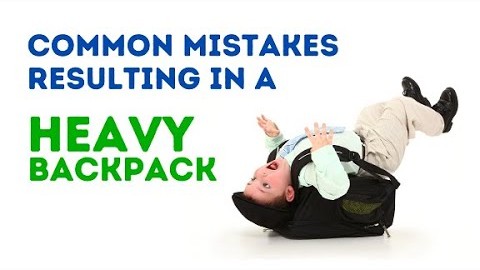
Rim to Rim
Training and Preparation
Training, gear, and nutrition tips for a Grand Canyon Rim to Rim hike.
Training, gear, and nutrition tips for a Grand Canyon Rim to Rim hike.
Grand Canyon Rim 2
Rim
Hiking the Grand Canyon from North Rim to South Rim in one day.
Hiking the Grand Canyon from North Rim to South Rim in one day.

Follow Me
@cory_outdoors