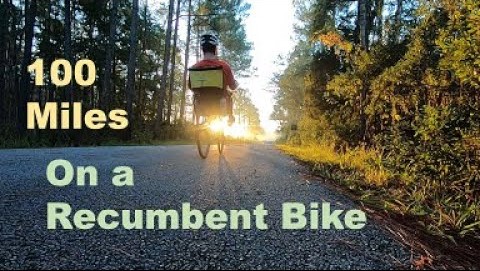
100 Miles on a
Recumbent
Bike
Riding 100 miles on a recumbent bike along the Suncoast Trail.
Tips for Biking to Work
I've been commuting by bike for two years now - 14 miles each way - and I've picked up a
few tricks along the way for packing, cleaning up, and staying safe out there. Here's the
video, plus everything I cover in it.
Packing Light
When I'm not carrying my stuff in a backpack with my laptop, I use a cinch bag. I pack a polo and a pair of pants (usually jeans, sometimes khakis), stacked together and slid right in - there's plenty of room left over. Since I have access to a locker room with a shower at work, I toss in a lock too, and I always keep a plastic bag tucked in there in case it starts raining hard and I need to keep things dry.
For soap, I like Dr. Bronner's - it's a concentrate, so a little bottle goes a long way if
you want several washes worth. I also always bring a towel, and I look for a thinner,
lighter one rather than a puffy full bath towel. It really adds up: an extra pound or two
on your back over a longer ride can wear you down, so every ounce you shave off your pack
helps. I compared a couple of my shoes once - one was 8.9 ounces, the other a pound five -
and that kind of difference matters when you're carrying it the whole way in.
If you need a change of shoes for a dress code, look for ones that pack down small -
slip-ons without laces are often lighter and squish down easier than a bulkier pair.
Personally, I usually just bike in wearing the shoes I plan to wear at work.
Cleaning Up When You Get There
Having access to a locker room and shower is the best-case scenario, but that's not everyone's setup. If all you've got is a bathroom sink, get to work a little early and let your body cool down for about 10 minutes before you start washing up - if you dive straight into a sink wash while you're still hot, you'll just keep sweating through it. Bring a washcloth and towel, and baby powder or baby wipes are both easy ways to freshen up without a full shower.Staying Safe on the Commute
Get good lights - a bright one up front and at least a modest one in back, with blinking and steady modes. Commuting means sharing the road with drivers who are often still waking up, especially in the morning, and a low, rising or setting sun can make it that much harder for them to see you. I also keep reflectors on my commuter bike, which I'd otherwise skip - they don't hurt anything and only help once the light starts to fade.
Beyond the bike itself, just take your time. Don't rush intersections, wait for solid
gaps in traffic, and if a dedicated bike trail gets you there even a little slower, take
it over the faster road route.
Gear and Odds and Ends
I use flat pedals with a strap-in opening rather than clip-ins for my commute, since it lets me wear my regular work shoes and skip carrying a second pair of biking shoes - I still get a noticeable boost in efficiency from them. For carrying gear on the bike itself rather than on your back, look into panniers that hang off a rear rack, or bikepacking bags that fit into the frame.
A few last things: if you've got real distance to cover, a road bike or hybrid with
narrower tires will get you there a lot more efficiently than a mountain bike with fat
tires. Don't forget hydration - I go through most of a water bottle over my 14 miles.
And it's worth checking whether your city has bike commuter programs (some offer things
like a free ride home in a pinch, or a bike buddy to ride with), plus most city buses have
racks that'll take your bike if you need a backup plan.
Biking to work is genuinely satisfying - you get your exercise in, you burn less gas, and
once you've got your routine dialed in it barely feels like extra effort. If you've been
on the fence about it, I'd say give it a shot.

Follow Me
@cory_outdoors