Garage Bike
Storage - The Best Way!
A cheap, simple hook system that gets every bike, recumbents included, up off the
garage floor.
Can You Handle a Recumbent Bike?
Let me clear something up first - this isn't about whether you can manage to own a
recumbent or figure out how to climb on and pedal one. I mean literally: can you handle
one? Can you steer it around tight 90-degree turns, on and off sidewalks and paths and
ramps? Recumbents have a reputation for being clumsy in tight spaces, and I wanted to
put that reputation to the test.
Short Wheelbase Makes the Difference
My recumbent is what's called a short wheelbase bike, the most common style out there. The wheels sit close together, roughly the same distance apart as on a road bike or mountain bike, rather than the stretched-out layout of a long wheelbase recumbent where the front wheel sits way out ahead of you. That closer wheelbase is what lets me navigate tight spaces the way I do in this video.Testing It at the Sports Complex
I took the bike to a local sports complex with a mix of pathways - some a comfortable eight or nine feet wide, others narrowing down to a tight five feet. There's a string of back-to-back 90-degree turns built right into the layout, which made it a perfect real-world obstacle course for testing steering and tight-radius handling.An Alligator Cameo
Partway through filming, an alligator showed up sunning itself on the far bank of a nearby pond - a reminder that even a routine test ride in Florida comes with the occasional wildlife encounter thrown in for free.The Parking Lot Test
To finish things off, I ran the bike through a standard parking lot, using the painted parking spots - about eight to nine feet wide - as a built-in measuring stick for just how tight my turning radius really is. If you've ever wondered whether a recumbent could handle weaving between cars or navigating a lot at low speed, this is about as real a test as it gets.
The takeaway: a short wheelbase recumbent is far more nimble than its reputation
suggests. High traffic areas, tight spaces, everyday commuting - it can handle all of
it just fine.

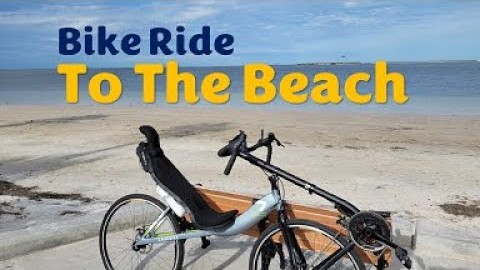
Bike Ride
to the Beach, Sunset Beach in Tarpon Springs Florida
A 35-mile round trip recumbent ride from the Starkey Gap Trail to the Gulf of Mexico.
A 35-mile round trip recumbent ride from the Starkey Gap Trail to the Gulf of Mexico.

Recumbent
Bikes - What It's Like
A beginner's look at riding a two-wheeled recumbent bike for the first time.
A beginner's look at riding a two-wheeled recumbent bike for the first time.

Follow Me
@cory_outdoors